
Introduction
In the world of modern construction, time, precision, and safety play a crucial role in ensuring successful project outcomes. One of the most repetitive yet critical tasks in construction is bending reinforcement bars (commonly known as rebars) to the required shapes and angles. Traditionally, this was done manually using hand tools, which demanded extensive labor, skill, and physical effort. However, with technological advancements in light construction equipment, the Bar Bending Machine has emerged as a game-changer.
This blog explores the comparison between Bar Bending Machine and manual bending, highlighting their advantages, disadvantages, applications, and helping you decide which method is best suited for your project.
What is a Bar Bending Machine?
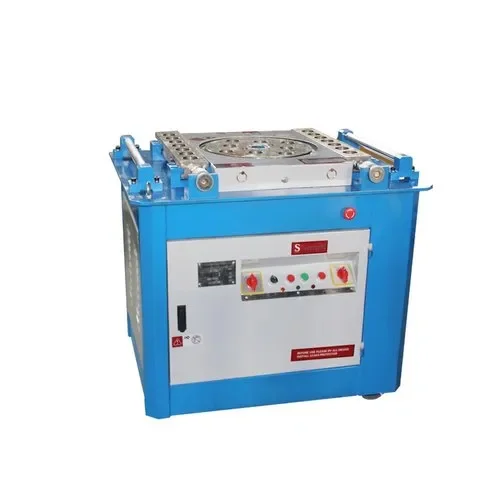
A Bar Bending Machine is a specialized construction tool designed to bend reinforcement bars (rebars) and steel rods into precise shapes and angles as required in building designs. These machines are equipped with powerful motors, angle controllers, and safety features, enabling workers to bend steel quickly, consistently, and with less effort.
Today, the Bar Bending Machine has become an integral part of light construction equipment used across residential, commercial, and infrastructure projects.
What is Manual Bending?
Manual bending refers to the traditional method of using hand tools, levers, or simple jigs to bend reinforcement bars. This process depends entirely on the skill and strength of workers. While it may still be used in small-scale projects, manual bending is labor-intensive, time-consuming, and often inconsistent in accuracy.
Comparing Bar Bending Machine and Manual Bending
Let’s break down the comparison into major factors that matter in construction projects.
1. Precision and Accuracy
-
Manual Bending:
Manual methods rely heavily on the experience of workers. Achieving perfect bends consistently is difficult, and small errors in angles can compromise structural integrity. -
Bar Bending Machine:
Equipped with programmable angle settings, a Bar Bending Machine ensures precise, repeatable bends every time. This accuracy enhances the strength and safety of the structure.
Winner: Bar Bending Machine
2. Speed and Productivity
-
Manual Bending:
Bending steel manually is slow. Workers can only process a limited number of rebars in a day, which delays large-scale projects. -
Bar Bending Machine:
These machines significantly increase productivity, bending multiple bars quickly with minimal effort. This speed allows construction companies to complete projects faster.
Winner: Bar Bending Machine
3. Labor Requirements
-
Manual Bending:
Requires a team of workers to bend, measure, and adjust bars. The physical strain is high, and efficiency decreases over time. -
Bar Bending Machine:
A single operator can handle bending tasks with ease, reducing the overall workforce needed and lowering project costs.
Winner: Bar Bending Machine
4. Cost Efficiency
-
Manual Bending:
On the surface, manual bending appears cheaper since no machinery investment is required. However, higher labor costs, longer project timelines, and increased steel wastage make it less cost-effective in the long run. -
Bar Bending Machine:
While the initial investment in a Bar Bending Machine may be higher, the long-term savings in labor, time, and material wastage make it a more economical option.
Winner: Bar Bending Machine
5. Safety
-
Manual Bending:
Workers are at risk of injuries such as muscle strain, cuts, and accidents while bending bars manually. Safety measures are minimal. -
Bar Bending Machine:
Modern machines are equipped with safety covers, emergency stop buttons, and foot pedal operations to ensure safer working conditions.
Winner: Bar Bending Machine
6. Consistency in Quality
-
Manual Bending:
Quality depends on human effort, which can vary. Inconsistent bends may lead to weak structures. -
Bar Bending Machine:
Machines provide uniform, consistent bends across hundreds of bars, ensuring reliability in large-scale projects.
Winner: Bar Bending Machine
7. Suitability for Different Project Scales
-
Manual Bending:
Still practical for small projects, temporary works, or when only a few bends are required. -
Bar Bending Machine:
Essential for medium to large projects, where thousands of bends must be completed efficiently.
Winner: Depends on project size, but for modern projects – Bar Bending Machine
Advantages of Using a Bar Bending Machine
-
Time-Saving: Rapid bending reduces project timelines.
-
Labor Reduction: Requires fewer workers compared to manual bending.
-
Accuracy: Delivers precise bends with programmable angles.
-
Durability: Built with heavy-duty steel to withstand tough conditions.
-
Cost Savings: Reduces wastage of materials and lowers overall costs.
-
Versatility: Handles various bar diameters and thicknesses.
-
Safety: Minimizes workplace accidents with advanced safety features.
Disadvantages of Manual Bending
-
Time-Consuming: Slows down large construction projects.
-
Labor-Intensive: Requires more manpower and physical strength.
-
Inaccuracy: Angles often vary, leading to structural weaknesses.
-
Higher Costs: Long-term costs rise due to labor and steel wastage.
-
Unsafe: Increased risk of injuries due to physical strain and mishandling.
Applications of Bar Bending Machine
The Bar Bending Machine is widely used across multiple construction sectors:
-
Residential and Commercial Buildings – For bending rebars used in beams, slabs, and columns.
-
Infrastructure Projects – Essential in bridges, flyovers, tunnels, and dams.
-
Road Construction – Reinforcement of foundations and retaining walls.
-
Precast Concrete Units – For shaping bars used in precast components.
-
Industrial Facilities – Warehouses, plants, and factories.
Why Bar Bending Machines are Considered Light Construction Equipment
Light construction equipment refers to machines that are portable, efficient, and essential for tasks like cutting, bending, compacting, or finishing. A Bar Bending Machine falls under this category because it is compact, easy to operate, and significantly improves work efficiency on site.
Contractors prefer such equipment because it reduces dependency on labor, improves accuracy, and ensures faster project delivery. Alongside machines like bar cutting machines, concrete mixers, and compactors, the Bar Bending Machine is indispensable in today’s construction industry.
Real-World Scenario: Manual vs Machine Bending
Imagine a mid-sized residential project requiring 10,000 bends in steel reinforcement bars.
-
Manual Bending:
With a team of five workers, bending manually might take weeks. Errors in bending angles could lead to wasted material and rework. -
Bar Bending Machine:
A single operator using a machine can complete the same task within days, with higher accuracy, fewer errors, and enhanced safety.
The difference in efficiency, safety, and cost makes the Bar Bending Machine the smarter choice for serious contractors.
Future of Construction with Bar Bending Machines
As construction projects in India and across the world become more advanced, the reliance on light construction equipment like Bar Bending Machines will continue to grow. The demand for speed, accuracy, and safety leaves little room for outdated manual practices.
With advancements such as programmable controls, automation, and digital monitoring, the Bar Bending Machine is evolving into an even more powerful tool for modern infrastructure development.
Conclusion: Which is Better for Your Project?
When comparing Bar Bending Machine vs Manual Bending, the results are clear:
-
Manual bending may still serve small or temporary projects where budgets are extremely limited.
-
However, for medium to large construction projects, the Bar Bending Machine is undeniably better due to its speed, accuracy, safety, and cost efficiency.
Investing in a Bar Bending Machine, an essential part of light construction equipment, is not just about improving productivity—it’s about building safer, stronger, and more reliable structures. For contractors aiming to save time, reduce costs, and deliver quality, the Bar Bending Machine is the ultimate solution.